



Quick Answer: Furnace issues in extreme cold happen when systems run beyond their design limits, heat loss accelerates, and small airflow, ignition, or combustion problems reduce heat output. Sub-zero temperatures magnify these weaknesses, causing longer run times, uneven heating, and efficiency loss. Even a working furnace can struggle when demand exceeds capacity. Identifying these issues early helps prevent rising energy bills and winter breakdowns.
How Flame Problems Trigger Furnace Issues in Extreme Cold
When furnaces operate in extreme cold, combustion must remain stable for long, uninterrupted cycles to maintain heat output.
If flame quality becomes weak or incomplete, the burner may start producing a yellow flame instead of a steady blue one. In extreme cold, this directly reduces heat output during long run cycles, which is why homeowners often need to fix yellow flame on gas furnace issues when temperatures drop and heating demand is highest.
Even minor flame instability can significantly reduce heating efficiency during prolonged cold snaps.
Why Furnaces Stop Keeping Up During Extreme Cold
The furnace not keeping up with extreme cold is usually a capacity limitation, not an immediate failure.
Fast Checks During an Extreme Cold Snap
- Confirm the thermostat is set to HEAT and replace batteries if needed.
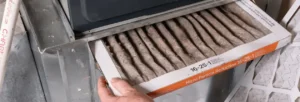
- Check the air filter and replace it if it looks dusty or clogged.
- Make sure supply vents and return grilles are open and not blocked by rugs or furniture.
- Look outside to ensure intake/exhaust pipes are not buried in snow or ice.
- Listen for ignition attempts (clicking/starting sounds) and note any repeated failures.
Every furnace is engineered to handle a specific outdoor temperature range. When temperatures fall well below that range, heat escapes faster than the system can replace it. The furnace may run constantly but still fail to raise indoor temperatures, creating the perception of poor performance.
This condition becomes more noticeable during multi-day cold fronts.
When Heat Loss Makes It Feel Like the Heat Can’t Keep Up
In extreme cold, homes often lose heat faster than furnaces can generate it.
Home Heat-Loss Hotspots That Kill Efficiency
- Drafts around exterior doors and weather stripping gaps
- Older windows with loose seals or cold glass surfaces
- Attic access panels and recessed lights leaking warm air
- Basement rim joists and crawlspace openings
- Open chimney dampers or poorly sealed fireplace doors
- Uninsulated garage walls shared with living spaces
Addressing heat loss is just as critical as furnace performance.
Thermostat Limits Exposed in Severe Cold Weather
During extreme cold, homeowners often experience the furnace not keeping up with thermostat settings.
Raising the thermostat does not produce hotter air, it only increases runtime and strain. Once the system reaches its maximum heating capacity, additional demand reduces efficiency rather than improving comfort. Choosing the right thermostat for the heating system helps to limit unnecessary cycling and stabilizes operation during severe cold.
Airflow Problems That Cause Cold Air From Vents
Restricted airflow becomes far more damaging during freezing weather.
Dirty filters, blocked vents, closed registers, or snow-covered intake pipes limit airflow and oxygen supply. This often results in the furnace blowing cold air then hot, especially during long heating cycles. When homeowners ask why my heater is blowing cold air, the cause is frequently airflow imbalance worsened by extreme cold conditions.
Ignition Failures When Temperatures Drop Suddenly
Cold weather exposes ignition weaknesses that may remain hidden in moderate temperatures. Metal contraction, aging ignitors, and stressed sensors can lead to furnaces not igniting, particularly overnight. In more severe cases, homeowners notice the furnace not kicking on when temp drops, even though the thermostat is calling for heat.
When Normal Struggle Becomes a Real Problem
- The furnace fails to ignite after multiple tries.
- The system short-cycles (turns on/off repeatedly within minutes).
- You notice persistent cold air from vents (not just at startup).
- You smell burning electrical odors or notice scorching near the unit.
- The home temperature drops steadily even while the furnace runs nonstop.
Ignition failures are among the most disruptive furnace issues in extreme cold.
Maintenance Gaps That Become Critical in Extreme Cold
Extreme cold rarely creates new furnace problems; it reveals existing ones.
Furnace Maintenance Checklist Winter Efficiency Habits That Reduce Furnace Strain
- Keep interior doors open to improve airflow balance between rooms
- Run ceiling fans clockwise to push warm air down
- Keep curtains closed at night to reduce window heat loss
- Avoid big thermostat setbacks during severe cold (small changes are better)
- Replace filters on schedule during winter (often every 30–90 days)
- Seal obvious drafts around doors and windows to reduce runtime
Poor maintenance dramatically increases the risk of cold-weather breakdowns.
Common Furnace Issues in Extreme Cold
Issue | What Happens | Efficiency Impact |
Rapid heat loss | Furnace can’t recover | Higher energy usage |
Long run times | Constant operation | Increased wear |
Restricted airflow | Poor heat delivery | Reduced output |
Flame instability | Lower heat production | Fuel waste |
Ignition delays | Startup failures | Inconsistent heating |
Early Warning Signs Your Furnace Is Reaching Its Limit
Extreme cold magnifies subtle performance issues.
Uneven heating, frequent cycling, unusual noises, reduced airflow, and slow temperature recovery are classic signs of a furnace going out. These symptoms often worsen quickly during freezing conditions and should be addressed immediately.
When Professional Heating Services Are Required
Basic steps like replacing filters or clearing vents can help, but they have limits. If efficiency issues persist, advanced diagnostics are required to evaluate airflow, ignition timing, and system capacity. At this stage, Professional heating services are essential to restore performance and prevent unsafe operation during extreme cold.
Why an Experienced Plumbing Team Matters in Winter
Extreme cold stresses the entire heating system, not just the furnace. Gas supply consistency, venting integrity, and moisture control all affect winter performance. An Experienced plumbing team working alongside heating professionals can identify hidden issues that only appear under sustained cold-weather demand.
Normal vs Problematic Furnace Behavior
Behavior | Normal in Extreme Cold | Needs Attention |
Long run times | ✔ | — |
Slight temperature drop | ✔ | — |
Cold air from vents | — | ✔ |
No ignition | — | ✔ |
New or loud noises | — | ✔ |
Get Help Before the Next Cold Snap
If extreme cold is pushing your furnace beyond its limits, don’t wait for a breakdown.
Duty Calls Plumbing and Rooter llc provides expert diagnostics and winter-ready heating solutions.
📞 Call (816) 945-2131 today to protect your heating system and restore efficiency.
FAQs About Furnace Issues in Extreme Cold
Why is my furnace not keeping up with extreme cold?
When outdoor temperatures drop far below normal, heat loss can outpace what your furnace can replace. Long run times are common, but if indoor temperature keeps falling, you may have excessive heat loss, restricted airflow, or reduced heat production.
Why is the heat not keeping up with cold even when the furnace runs nonstop?
In extreme cold, drafts, older windows, attic leaks, and low insulation can drain heat faster than the furnace can recover it. Dry air can also make rooms feel colder, leading to higher thermostat settings and longer run times without better comfort.
Why is my furnace not keeping up with thermostat settings?
If the thermostat is set higher than the system can reach during severe cold, the furnace may run continuously and still stall a few degrees below the setpoint. This can also happen if airflow is restricted or the system is losing heat too fast.
What causes furnace not igniting during extreme cold?
Ignition issues during cold snaps can be caused by a worn ignitor, a dirty flame sensor, airflow-related safety shutdowns, or electrical interruptions. If the furnace repeatedly tries and fails to light, the issue should be inspected promptly.
Why does my furnace blow cold air then hot?
Brief cool air at startup can be normal because the blower may run before the heat exchanger warms up. If cold air lasts too long or happens repeatedly, it often points to airflow imbalance, delayed ignition, or reduced heat output.